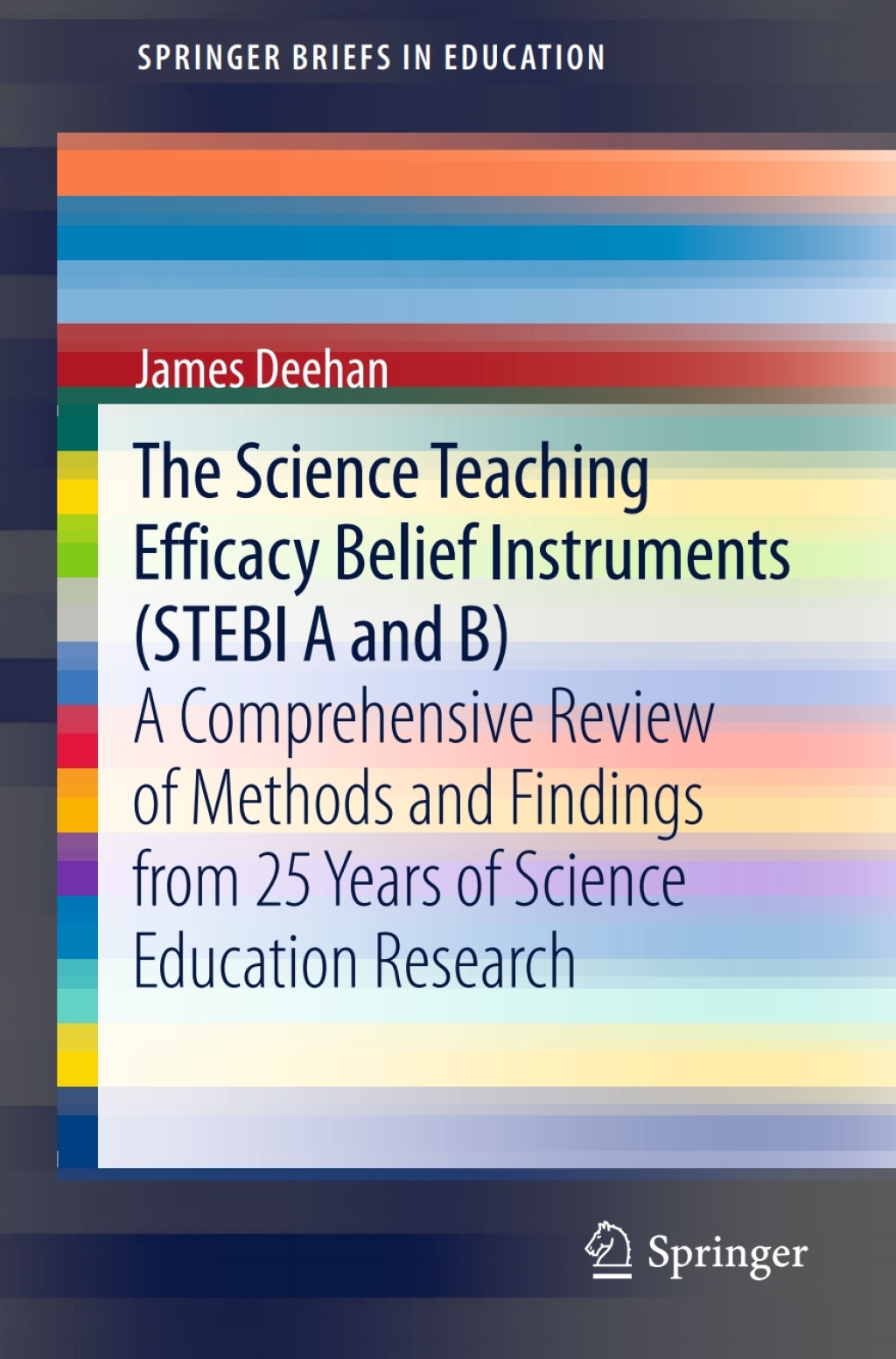
Description
The purpose of this Springer Brief is to provide a comprehensive review of both the STEBI methods and findings through the use of a clearly defined analytic framework. A systematic review of literature yielded 107 STEBI-A research items and 140 STEBI-B research items. The STEBI instruments have been used in a wide range of qualitative, cross sectional, longitudinal and experimental designs. Analysis of the findings of the papers reveals that in-service and pre-service programs that use innovative practices such as cooperative learning, inquiry based investigation and nature of science instruction can produce positive growth in participants� science teaching efficacy beliefs. The personal science teaching efficacy beliefs of pre-service and in-service teachers showed greater mean scores and higher growth than their outcome expectancies. Implications are discussed.Typham this is the title: The Science Teaching Efficacy Belief Instruments (STEBI A and B) A comprehensive review of methods and findings from 25 years of science education research


Reviews
There are no reviews yet.