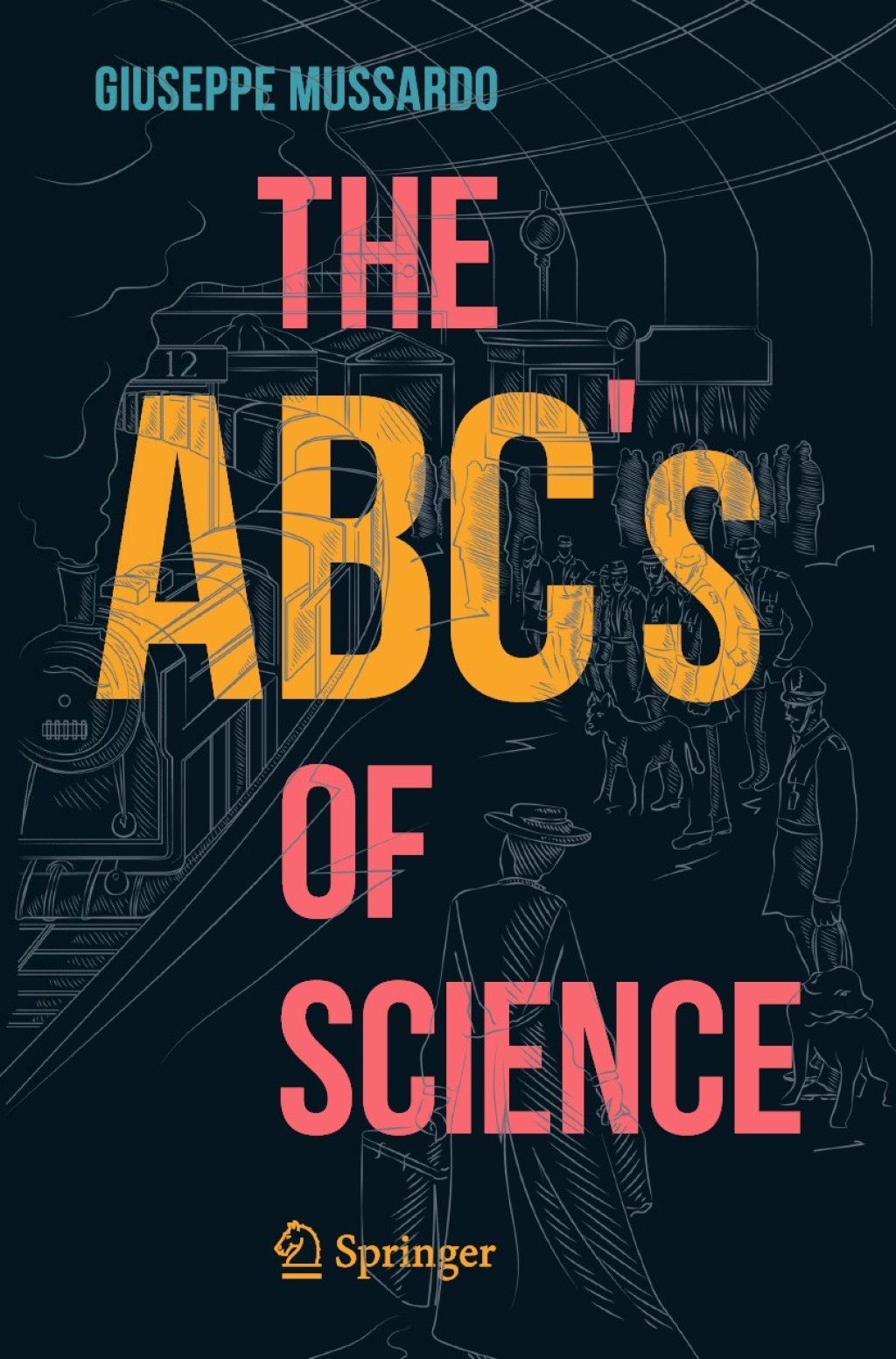
Description
Science, with its inherent tension between the known and the unknown, is an inexhaustible mine of great stories. Collected here are twenty-six among the most enchanting tales, one for each letter of the alphabet: the main characters are scientists of the highest caliber most of whom, however, are unknown to the general public. This book goes from A to Z. The letter A stands for Abel, the great Norwegian mathematician, here involved in an elliptic thriller about a fundamental theorem of mathematics, while the letter Z refers¬† to Absolute Zero, the ultimate and lowest temperature limit, – 273,15 degrees Celsius, a value that is tremendously cooler than the most remote corner of the Universe: the race to reach this final outpost of coldness is not¬† yet complete, but, similarly to the history books of polar explorations at the beginning of the 20th century, its pages record successes, failures, fierce rivalries and tragic desperations.¬† ¬† In between the A and the Z, the other letters of the alphabet are similar to the various stages of a very fascinating journey along the paths of science, a journey in the company of a very unique set of¬† characters as eccentric and peculiar as those in Ulysses by James Joyce: the French astronomer who lost everything, even his mind, to chase the transits of Venus; the caustic Austrian scientist who, perfectly at ease with both the laws of psychoanalysis and quantum mechanics, revealed the hidden secrets of dreams and the periodic table of chemical elements; the young Indian astrophysicist who was the first to understand how a star dies, suffering the ferocious opposition of his mentor for this discovery. Or the Hungarian physicist who struggled with his melancholy in the shadows of the desert of Los Alamos; or the French scholar who was forced to hide her femininity behind a false identity so as to publish fundamental theorems on prime numbers.¬† And so on and so forth. Twenty-six stories, which reveal the most authentic atmosphere of science and the lives of some of its main players: each story can be read in quite a short period of time — basically the time it takes to get on and off the train between two metro stations. Largely independent from one another, these twenty-six stories make the book a harmonious polyphony of several voices: the reader can invent his/her own very personal order for the chapters simply by ordering the sequence of¬† letters differently. For an elementary law of Mathematics, this can give rise to an astronomically large number of possible books — all the same, but – then again – all different. This book is therefore the ideal companion for an infinite number of real or metaphoric journeys.



Reviews
There are no reviews yet.