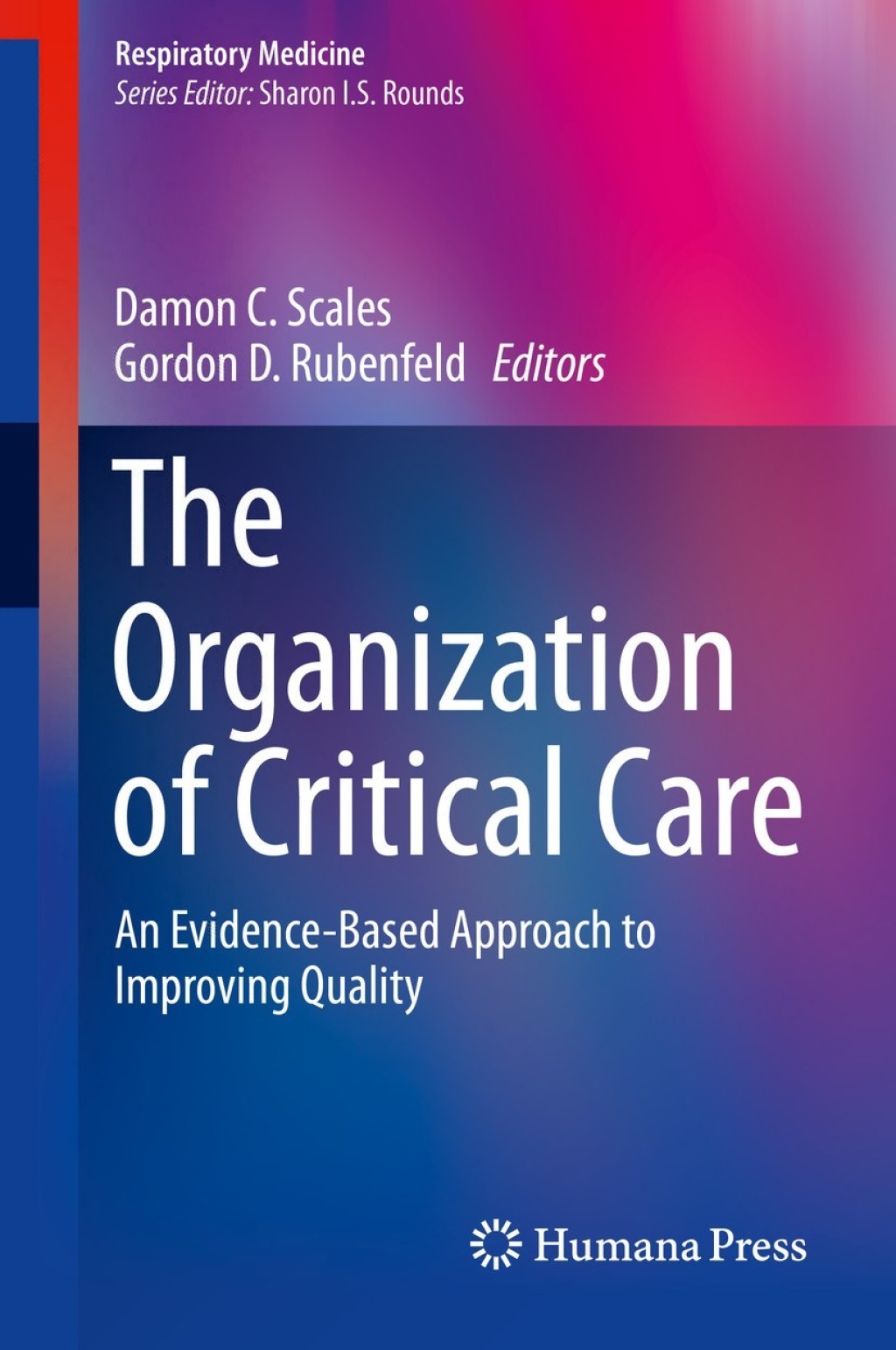
Description
The origin of modern intensive care units (ICUs) has frequently been attributed to the widespread provision of mechanical ventilation within dedicated hospital areas during the 1952 Copenhagen polio epidemic.� However, modern ICUs have developed to treat or monitor patients who have any severe, life-threatening disease or injury.� These patients receive specialized care and vital organ assistance such as mechanical ventilation, cardiovascular support, or hemodialysis.� ICU patients now typically occupy approximately 10% of inpatient acute care beds, yet the structure and organization of these ICUs can be quite different across hospitals.� In The Organization of Critical Care: An Evidence-Based Approach to Improving Quality, leaders provide a concise, evidence-based review of ICU organizational factors that have been associated with improved patient (or other) outcomes.� The topics covered are grouped according to four broad domains: (1) the organization, structure, and staffing of an ICU; (2) organizational approaches to improving quality of care in an ICU; (3) integrating ICU care with other healthcare provided within the hospital and across the broader healthcare system; and (4) international perspectives on critical care delivery.� Each chapter summarizes a different aspect of ICU organization and targets individual clinicians and healthcare decision makers. �A long overdue contribution to the field, The Organization of Critical Care: An Evidence-Based Approach to Improving Quality is an indispensable guide for all clinicians and health administrators concerned with achieving state-of-the-art outcomes for intensive care.Typham this is the title: The Organization of Critical Care An Evidence-Based Approach to Improving Quality



Reviews
There are no reviews yet.